Welcome to VMA Psych.
Your trusted provider of exceptional mental health services in the GTA & beyond. Learn More
With 40+ years as Toronto's leading psychologists, we guide individuals through life's complexities, offering specialized services for a brighter future.
Recommended For You


Quick Answer
Feeling "stuck" is often a nervous system response, not laziness, tied to a "freeze" state that can reduce motivation and impair planning ability when the brain perceives prolonged stress as a threat. Common root causes include unprocessed emotions, perfectionism, cognitive distortions, learned helplessness, burnout, and disconnection from personal values.
The clinical insight: common root causes include unprocessed emotions, perfectionism, cognitive distortions, learned helplessness, burnout, and disconnection from personal values
The takeaway: strategies like naming the specific emotion, clarifying values, breaking goals into tiny steps, challenging limiting beliefs, and physical movement may help build momentum
Getting support: VMA Psych offers individual counselling, CBT, and ACT in Etobicoke and across the Greater Toronto Area (GTA)
Life in Neutral
We've all felt it: the heavy, paralyzing sensation of a life idling in neutral. A career that's lost its spark, a relationship that feels flat, a general sense of emotional apathy. Feeling "stuck" at times is practically a universal experience.
A 2020 Gallup survey found that 76% of employees experience burnout at least sometimes, with 28% reporting they feel burned out "very often" or "always." It also noted that burnout is one of the most common paths to feeling stuck more broadly.
From a psychological perspective, feeling stuck isn't a sign of laziness or weak willpower. It's a biological and psychological signal that something in your internal landscape needs to shift, but your nervous system currently lacks the resources or the roadmap to make that change safely.
At VMA Psych, serving clients in Etobicoke and across the GTA, we frequently work with people navigating emotional roadblocks, burnout, and indecision. Below, we explore the neurobiology of "stuckness," its psychological root causes, and evidence-based strategies to help you finally move forward.
The Neurobiology: What Does It Mean to Be "Stuck"?
To understand why you feel paralyzed, it helps to look directly at the nervous system. When you face prolonged stress, chronic indecision, or emotional overwhelm, your brain often reads the situation as a threat.
If you can't fight the threat or flee from it, your autonomic nervous system can default to the "freeze" response, specifically a dorsal vagal shutdown. In this state, the brain actively conserves energy: it reduces dopamine production (your motivation neurotransmitter) and impairs the prefrontal cortex, the area responsible for planning and executive functioning.
This is why you can't simply "think" your way out of feeling stuck. Your body has effectively hit the brakes to protect you from further psychological exhaustion, even when that protection isn't actually needed anymore.

Why Do I Feel Stuck in Life? 6 Psychological Root Causes
Beyond the biological freeze response, several cognitive and emotional patterns keep people from moving forward.
Unprocessed emotional trauma
Suppressing difficult emotions such as grief, shame, anger, and fear consumes more cognitive energy than we sometimes like to admit. We understand that processing things can suck! But avoiding these feelings can create emotional roadblocks that slow or stop forward momentum.
The paradox of perfectionism
Perfectionism is rarely about having high standards. It's almost always an avoidance strategy driven by fear of failure or judgment. When someone believes they must execute a change flawlessly or not at all, they stay stuck in the "planning" phase indefinitely.
Cognitive distortions
Negative thinking patterns act as mental glue. Catastrophizing ("if I change careers, I'll go bankrupt"), all-or-nothing thinking ("if my relationship isn't perfect, it's a total failure"), and overgeneralization all keep people trapped in cycles of fear and self-doubt.
Learned helplessness
Coined by psychologist Martin Seligman, learned helplessness happens when repeated past failures or traumas convince the brain that it has no real control over outcomes. If you subconsciously believe your efforts won't change your situation, your brain simply stops trying to generate solutions, a protective response that unfortunately also blocks progress.
Clinical burnout
Burnout is the result of chronic, unmanaged workplace or lifestyle stress. And in this economy, who doesn't feel burnt out from time to time? But when you're burned out, your executive functioning becomes significantly depleted. Even basic daily tasks, let alone major life decisions, can feel completely overwhelming.
Disconnection from core values
When you're operating out of alignment with your authentic values, often living to meet the expectations of parents, partners, or broader social pressure, internal motivation eventually dries up. You feel stuck because the path you're on was never actually yours.

The Psychology Behind "Stuckness"
From a therapeutic lens, feeling stuck often stems from a disconnect between current behaviour and internal values. Acceptance and Commitment Therapy (ACT) centres on psychological flexibility: the ability to act in alignment with your values even in the face of discomfort. When we feel stuck, it's often because we're avoiding discomfort or uncertainty rather than leaning into what's actually meaningful.
Cognitive Behavioural Therapy (CBT) adds another piece to the picture, showing how distorted thinking patterns, such as all-or-nothing thinking or catastrophizing, reinforce a sense of helplessness even when the situation itself is genuinely changeable.

How to Get Unstuck: A 5-Step Clinical Guide
Breaking out of paralysis means working with the brain's overwhelm response, not against it. Here are evidence-based steps drawn from modern psychotherapy.
Step 1: Affect labelling, name the emotion
Research shows that putting feelings into words, a process called affect labelling, decreases activity in the amygdala, the brain's alarm system.
The action: instead of just saying "I feel stuck," get specific.
Are you feeling terrified of failure? Deeply bored? Resentful?
It sounds childish, but an emotion wheel can really help us identify specific feelings and teach us a broader language for understanding our emotions. Naming it starts to remove its grip on you.
Step 2: Value clarification (ACT)
Psychological flexibility, the ACT concept described above, is central to well-being: the ability to act in line with your values even when you feel anxious or uncomfortable.
The action: reconnect with your compass. Write down your top three core values (creativity, autonomy, connection, whatever fits).
Is your current situation actively starving one of them? If so, what's one small action you could take today to honour it instead?
Step 3: Behavioural activation and "micro-chunking"
When you're overwhelmed, a massive goal will trigger executive dysfunction almost instantly. You need to lower the barrier to entry so much that your brain can't say no.
The action: use "chunking." If you want to change careers, today's goal isn't "find a new job." Today's goal is to spend exactly five minutes updating the top section of your resume.
Small, achievable actions release micro-doses of dopamine, which gradually rebuild your motivation.
Step 4: Challenge limiting beliefs (CBT)
CBT encourages actively auditing your internal monologue rather than accepting it as fact.
The action: write down the primary thought keeping you stuck ("it's too late for me to start over"). Play scientist. What objective evidence proves this thought is 100% true? What evidence proves it's false?
Reframe it with a more balanced tone, like, "Starting over is uncomfortable, but people reinvent themselves at every age."
Step 5: Somatic movement, shift the body
Because "stuckness" is often a physiological freeze state, you need to physically signal to your body that it's safe to move again.
The action: research in somatic psychology supports physical movement as a means of shifting mental states. When you feel paralyzed, don't try to think your way out of it first.
Stand up, take a 10-minute walk, stretch, or try deep diaphragmatic breathing. Moving the body is often what actually moves the mind.
Recommended Reading: Anatomy of a Breakthrough
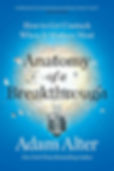
Anatomy of a Breakthrough: How to Get Unstuck When It Matters Most by Adam Alter, PhD, is a strong, research-backed choice if you want the science behind why humans get stuck in their careers, creative pursuits, and relationships. Alter, a professor of psychology and marketing at NYU, offers a practical, validated framework (the "friction audit") for identifying exactly what's holding you back and how to engineer your own way through it. If you're drawn to a more reflective, less clinical-feeling read, The Mountain Is You by Brianna Wiest explores how self-sabotage often traces back to unresolved trauma, blending psychological insight with a more poetic style. The two work well as complements: Alter for the mechanics, Wiest for the emotional undercurrent.

When to Seek Professional Help
Feeling stuck is a normal part of being human. But if this feeling has persisted for several months, comes with symptoms of depression (hopelessness, changes in sleep or appetite), or is seriously interfering with your daily functioning, it's time to seek professional support.
If hopelessness ever comes with thoughts of harming yourself, please don't wait on this alone: call or text 988 (Talk Suicide Canada, 24/7) or go to your nearest emergency department. Feeling stuck and being in crisis aren't the same thing, but they can overlap, and it's always worth erring on the side of reaching out.
Professional therapy provides the objective, skilled scaffolding you need to identify and address the root causes of your paralysis, dismantle rigid cognitive distortions, rebuild self-efficacy and confidence, and build a structured, actionable roadmap forward.
Frequently Asked Questions
Is feeling stuck the same thing as depression?
Not necessarily, though they can overlap and sometimes look similar from the outside. Feeling stuck often centres on indecision, avoidance, or a mismatch with your values, while depression involves a broader, more persistent shift in mood, energy, and interest. If hopelessness, appetite or sleep changes, or a loss of interest in almost everything is present, it's worth having a professional help sort out which one (or both) you're dealing with.
How long is it normal to feel stuck before seeking help?
There's no strict cutoff, but if the feeling has lasted more than a few months, is worsening, or is meaningfully affecting your work, relationships, or daily functioning, that's a reasonable time to seek professional support rather than waiting for it to resolve on its own.
Can you be "stuck" in some areas of life but not others?
Yes, this is actually common. Someone might feel completely stuck in their career while their relationships and personal life feel fine, or vice versa. The root causes above (perfectionism, disconnection from values, burnout) often show up in specific domains rather than uniformly across your whole life.
Why doesn't just "thinking positively" help when I feel stuck?
Because stuckness is frequently a physiological state, not just a mindset. If your nervous system is in a freeze response, positive self-talk alone doesn't reach the part of the brain actually driving the paralysis. That's why body-based strategies (movement, breathing) are included alongside the more cognitive ones in this guide.
What's the difference between being stuck and just needing rest?
Rest restores energy you'll use once you resume. Being stuck often persists even after rest, since it's tied to an unresolved emotional, cognitive, or values-based block rather than simple fatigue. If rest alone isn't shifting the feeling after a reasonable amount of time, that's a sign that something deeper is likely at play.
Move Forward With VMA Psych
You don't have to navigate this threshold alone. The discomfort you're feeling right now isn't a sign that you're broken. It's often the first real sign that a deeper part of you is ready for change.
Our experienced Etobicoke-based clinicians offer tailored individual counselling, Cognitive Behavioural Therapy (CBT), and Acceptance and Commitment Therapy (ACT) to help you break through internal barriers.
Ready to get unstuck?
Contact VMA Psych today to book a consultation, available in person in the GTA or virtually across Ontario.
All Resources