Welcome to VMA Psych.
Your trusted provider of exceptional mental health services in the GTA & beyond. Learn More
With 40+ years as Toronto's leading psychologists, we guide individuals through life's complexities, offering specialized services for a brighter future.
Recommended For You


Quick Answer
Emotional resilience is the ability to adapt, recover, and continue forward through life's challenges. It is not about avoiding stress. It is about building the internal resources to navigate it. Therapy supports resilience by developing self-awareness, restructuring unhelpful thought patterns, regulating the nervous system, and strengthening the coping strategies that hold under real pressure.
The Clinical Insight: Chronic stress or trauma can dysregulate the nervous system, and therapy often incorporates grounding, mindfulness, and breathwork to help shift from a stress response back to calm.
The Takeaway: Practical steps include setting small goals, practicing self-compassion, developing healthy coping strategies, and learning to recognize personal triggers.
Getting Support: VMA Psych offers individual counselling in Etobicoke and across the Greater Toronto Area (GTA) using CBT, mindfulness, and somatic approaches.
Most people think of therapy as something you turn to when things fall apart. In reality, therapy is one of the most effective tools available for building the inner resources that prevent the collapse in the first place.
Emotional resilience is not a fixed trait you either have or lack. It is a set of learnable skills that includes the capacity to adapt to adversity, recover from setbacks, and move forward without being defined by the difficulty. Resilience research consistently shows that it is built through experience, reflection, and practice, not inherited as a stable personality feature.
At VMA Psych, serving clients in Etobicoke and across the Greater Toronto Area (GTA), we work with individuals using evidence-based approaches, including Cognitive Behavioural Therapy (CBT), mindfulness-based therapies, and somatic strategies to help build resilience that holds up when it counts.
What emotional resilience actually means
Emotional resilience is the capacity to respond to stress, adversity, or significant life disruption without becoming overwhelmed or permanently destabilized. The American Psychological Association's (APA) research on resilience consistently identifies it not as the absence of difficulty, but as the ability to engage with difficulty effectively and recover from it.
Resilient people still experience grief, anxiety, failure, and conflict. What distinguishes them is not the absence of those experiences, but the presence of internal and relational resources to work through them.
Therapy is one of the most structured ways to deliberately build those resources.

How therapy builds emotional resilience
Therapy strengthens resilience through three interconnected mechanisms: building self-awareness, restructuring unhelpful thought patterns, and developing practical coping tools that function under pressure.
Deepening self-awareness
Resilience begins with understanding how your thoughts, emotions, and behaviours interact. Therapy creates the conditions for that understanding: a consistent, structured space to observe your patterns without the noise and urgency of daily life. Over time, this self-knowledge becomes the foundation for catching unhelpful responses before they escalate.
Cognitive restructuring
Cognitive Behavioural Therapy (CBT) is one of the most extensively researched approaches to building resilience. A core component is cognitive restructuring: learning to identify self-defeating thought patterns (catastrophizing, all-or-nothing thinking, negative self-attribution) and replace them with more accurate, balanced perspectives.
When anxiety distorts your assessment of a situation, cognitive restructuring gives you a method for reality-testing it. That skill is directly transferable to everyday stressors long after the therapy session ends.
Communication and boundary-setting
Resilience is not only an internal capacity. It also depends on the quality of your relationships and your ability to advocate for your own needs within them. Therapy develops the communication skills and boundary-setting frameworks that keep relationships supportive rather than depleting. Stronger relationships, in turn, are one of the most robust predictors of resilience in the research literature.

The role of nervous system regulation in resilience
Your capacity to stay grounded under pressure depends directly on your nervous system's ability to regulate itself. When the body perceives a threat, whether physical or emotional, it activates the fight, flight, or freeze response through the sympathetic nervous system. This is adaptive in acute danger. When stress becomes chronic, however, the system can get stuck in a state of activation, producing symptoms such as irritability, fatigue, emotional flooding, or emotional numbness.
Dr. Stephen Porges' Polyvagal Theory (2011) provides a neurobiological framework for understanding this process. It establishes that strengthening vagal tone, the nervous system's capacity to shift from stress activation back to calm, is foundational for emotional health and resilience. A dysregulated nervous system makes even manageable stressors feel overwhelming. A regulated one considerably expands your window of tolerance for stress.
Therapy addresses this directly through:
Grounding and mindfulness techniques
Grounding practices anchor attention in the present moment, interrupting the rumination loops that keep the nervous system activated. Mindfulness-based approaches, including Mindfulness-Based Cognitive Therapy (MBCT) and Mindfulness-Based Stress Reduction (MBSR), have a strong evidence base for reducing anxiety, preventing depressive relapse, and building emotional tolerance.
Somatic awareness practices
Somatic approaches connect awareness of physical sensations to emotional states, helping clients track where stress is held in the body and learn to release it deliberately rather than allowing it to accumulate.
Breathwork and guided imagery
Controlled breathing directly stimulates the vagus nerve, activating the parasympathetic "rest and digest" response. Even a few minutes of diaphragmatic breathing measurably reduces cortisol and heart rate. These tools are among the most portable and immediately accessible techniques available for nervous system regulation.

Evidence-based methods for rebalancing a dysregulated nervous system
When nervous system dysregulation has become entrenched, more structured therapeutic intervention is often needed. The following approaches are well-supported by clinical research:
Somatic techniques
Grounding exercises, progressive muscle relaxation, and trauma-informed movement help the body discharge accumulated tension and return to a felt sense of safety.
Cognitive Behavioural Therapy (CBT)
CBT directly targets the catastrophic thinking patterns that amplify stress responses. By developing more accurate appraisals of threatening situations, clients experience less physiological activation in response to them over time.
Mindfulness-based therapies
MBCT and MBSR train the ability to observe thoughts and emotions without immediately reacting to them. This emotional tolerance is a direct building block of resilience.
Lifestyle stabilization
Therapists also support clients in building the daily routines that underpin nervous system health: consistent sleep, adequate nutrition, and regular physical activity. These are not secondary concerns. Sleep deprivation alone significantly impairs emotional regulation, and the research on exercise as an anxiety and depression intervention is extensive.
Practical steps for building resilience through therapy
Therapy creates the structure; the work happens between sessions. These are the practices most consistently associated with building durable resilience:
Set small, achievable goals
Resilience is built incrementally, not in large leaps. Breaking larger challenges into manageable steps builds momentum and evidence of your own capability. Your therapist can help you calibrate the size and pacing of those steps to where you are now.
Practise self-compassion
Research by Dr. Kristin Neff has consistently demonstrated that self-compassion, treating yourself with the same kindness you would extend to a friend who is struggling, is a stronger predictor of emotional resilience than self-esteem. Therapy creates the conditions to develop this capacity, particularly for people whose inner critic runs loudly.
Develop adaptive coping strategies
Resilience depends on having coping responses that actually work under pressure. Therapy helps identify where current strategies (avoidance, overthinking, self-criticism) are creating more stress rather than relieving it, and builds alternatives such as journaling, creative outlets, physical activity, or structured problem-solving.
Strengthen your support network
Social connection is one of the most reliable buffers against the impact of adversity. Therapy develops the communication skills and relational awareness needed to build and maintain those connections, even when stress makes withdrawal feel easier.
Identify your triggers and early warning signals
Understanding what triggers your stress response and recognizing the early signs before they escalate allows you to intervene when regulation is still manageable. Awareness is the prerequisite for choice.
Resilience is less about being unshakeable and more about becoming flexible: able to bend under pressure without breaking, and to return to your footing after.
Recommended Reading: Resilient
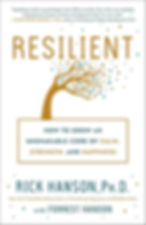
Resilient: How to Grow an Unshakable Core of Calm, Strength, and Happiness, by neuropsychologist Dr. Rick Hanson (2018), is one of the most practical and scientifically grounded books on building resilience. Hanson draws on positive neuroplasticity research to explain how the brain's built-in negativity bias makes us naturally prone to stress and anxiety, and how deliberately cultivating positive internal states can gradually rewire those patterns. The book is structured around specific, accessible exercises rather than abstract advice, making it a strong companion to therapeutic work in progress.
Build lasting resilience with VMA Psych
Resilience is not a destination. It is a practice that develops over time, with the right support.
Whether you are navigating a specific challenge or looking to strengthen your emotional foundation before one arrives, therapy offers a structured, evidence-based path forward. Working with a skilled clinician, you can develop the self-awareness, nervous system regulation, and coping tools that hold up under real-world pressure.
At VMA Psych, our clinicians in Etobicoke use evidence-based approaches including CBT, mindfulness, and somatic strategies to help individuals build a calmer, more balanced nervous system and a stronger sense of self. Sessions are available in-person at our Etobicoke location or virtually across Ontario.
Ready to invest in your resilience?
Contact VMA Psych to book a consultation with one of our clinicians.
Frequently asked questions
Is therapy only useful when you are in crisis?
No. Therapy is increasingly sought as a proactive investment in mental health rather than only a response to acute distress. Building resilience, improving self-awareness, and developing coping tools before a crisis hits are legitimate and clinically supported reasons to begin therapy. Many clients find that working with a therapist during a stable period yields faster, deeper progress than trying to do the same work in the middle of a difficult episode.
How long does it take to build emotional resilience through therapy?
It varies significantly depending on the individual, their history, the specific challenges they are working through, and how consistently they engage with the work between sessions. Many clients notice meaningful shifts in emotional flexibility and stress tolerance within a few months. Building durable resilience typically takes longer and is best understood as an ongoing practice rather than a fixed endpoint.
What types of therapy are most effective for building resilience?
The strongest evidence base for resilience-building is found in CBT, mindfulness-based approaches (MBCT, MBSR), and somatic therapies. For resilience challenges rooted in trauma, EMDR is also highly effective. The best approach depends on the individual and can be determined by a therapist in the early sessions.
Can I build resilience on my own, without a therapist?
Practices like mindfulness, journaling, exercise, and building social connections all contribute to resilience and are worth pursuing. For many people, these self-directed strategies are genuinely effective. When resilience challenges are rooted in trauma, entrenched thought patterns, or nervous system dysregulation, however, working with a therapist typically produces faster and more lasting change than self-directed effort alone.
What is the connection between resilience and nervous system regulation?
A dysregulated nervous system dramatically lowers your window of tolerance for stress, making otherwise manageable situations feel overwhelming. Resilience depends on having enough nervous system flexibility to stay functional under pressure. Therapeutic approaches that target regulation directly (breathwork, grounding, somatic therapy, EMDR) build this capacity at a physiological level, not just a cognitive one.
How do I know if my resilience is low?
Common signs include finding it difficult to recover from setbacks that used to feel manageable, being easily overwhelmed by stress, persistent difficulty with self-regulation, frequent burnout, or a sense that you are operating constantly near your limit without much room for error. These are not signs of weakness. They are signals that the internal resources available to you need support and rebuilding.
All Resources